
Redefining Resilience: From Survival to Agency in the Caribbean
- Klieon John

- Jun 21, 2024
- 4 min read
Yesterday, I attended a forum titled “Haiti Now: Development Priorities and Interventions.” The discussion focused on what resilience looks like in Haiti and across the wider Caribbean, particularly in the face of climate change and other emerging pressures. The conversation was thoughtful, grounded, and unsettling in the best way.
One line, offered by Barbados’ Ambassador to CARICOM, David Commissiong, stayed with me.
“Resilience defines Caribbean people.”
It’s a statement that feels instantly true. Resilience is woven into our history and our self-image. We see it in our families, our communities, our cultures. It is tied to survival through slavery, colonialism, political upheaval, economic constraint, and the persistent vulnerability of living in a disaster-prone region. Resilience has kept us standing.
But the more I sat with the idea, the more uneasy I became.

Because resilience, as it is often framed, is reactive. It is about endurance. It is about surviving catastrophe, absorbing shock, and returning—sometimes barely—to a previous state. It positions us as people who respond to forces rather than shape them. People defined by what happens to us.
And that raises an uncomfortable question: if we define ourselves primarily through resilience, do we risk locking ourselves into a permanent state of reaction?
After centuries of being resilient, do we now have the right—and the responsibility—to redefine what resilience means for us?
Resilience requires courage. The courage to endure, to recover, to keep going. But courage can also be a pivot point. Courage can move us from survival to initiative, from reaction to intention.
What if resilience in the Caribbean were not only about surviving crises, but about using disruption as a catalyst—to build, to innovate, to lead, and yes, to create wealth?
That idea was echoed powerfully in another talk this week by Paul Barnaby “PB” Scott, who delivered the William Demas Memorial Lecture. At one point, he said something that deserves to be printed on a T-shirt:
“We are a region that is very proud… but being proud doesn’t make you wealthy.”
It’s a sharp but necessary distinction. Pride and resilience are not the same as prosperity. A resilient community should not only survive—it should benefit. It should convert experience, creativity, and courage into productivity and opportunity.
Innovation sits at the centre of that shift. Not innovation as a buzzword or a fix for failure, but innovation as an active posture: curiosity, experimentation, imagination, and risk. Innovation allows us not just to repair systems, but to design new ones. To build wealth. To shape futures.

And imagination is where this begins.
Imagination is often dismissed as fanciful, but at its core, it is about vision. Image is embedded in imagination. To imagine is to see differently. To reimagine is to look again—to notice possibilities we previously overlooked.
That act is radical. And it carries risk. To act on new insight is to accept the possibility of failure.
Which raises another hard question: how much of what holds the Caribbean back is not lack of capacity, but fear of failure?
In the creative sector, I see this often. People are capable, skilled, and informed—but hesitate to act. The barrier is not talent. It is a risk.
Reimagining resilience means seeing ourselves not only as survivors, but as initiators.
This idea of re-seeing led me to think more deeply about indigeneity—Caribbean indigeneity in particular. Not just as identity, but as a relationship to space.
Traditionally, indigeneity has been framed in static, essentialist terms—rooted in colonial definitions of “first peoples” and cultural purity. A contemporary understanding, however, is fluid, self-defined, and dynamic. It acknowledges mixed heritage, adaptation, intersectionality, and agency.

Caribbean history supports this. In In the Forests of Freedom, Honeychurch documents how the Kalinago absorbed Africans and Europeans into a new, evolving identity. The Rastafari movement—an indigenous belief system born in the Caribbean—was not a response to catastrophe, but a radical act of imagination. It reshaped global culture.
These examples remind us that we are not just resilient—we are innovative.
Innovation extends beyond technology. We innovate in belief systems, culture, language, identity, and social structure. Even identity itself can be innovative.
Consider the global economic impact of Caribbean culture. The recent Bob Marley: One Love film earned over US$100 million worldwide in its first ten days. That value exists because of the Caribbean’s resilient, creative, courageous spirit.
Which brings me to a space of innovation that increasingly fascinates me: transportation and spatial organization.
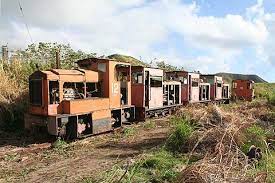


How we move—within countries and between them—is central to productivity, social cohesion, and resilience. Yet in the Caribbean, movement is expensive, inefficient, and often misaligned with how people actually live and work.
Inter-regional travel is prohibitively costly. Domestic transport systems are underdeveloped. In my home country, St. Kitts, single-carriage roads, limited public transport, and congestion restrict mobility and opportunity. Social life, nightlife, and economic participation all suffer as a result.
PB Scott touched on this when he spoke about free movement of people as a solution to issues of scale and capacity. This is innovation knocking at the door.
Imagine a region where moving between islands for work, education, collaboration, or language learning is normal and affordable. Where physical movement complements digital connectivity. Where existing infrastructure—like cruise routes or even underused train lines—is reimagined to serve local productivity, not just tourism.
An optimised transportation system strengthens social ties, expands opportunity, and builds resilience by design—not by reaction.
So perhaps it is time to move beyond a survivalist definition of resilience.
To redefine resilience as agency. As productivity. As imagination is put into motion.
The Caribbean has earned the right to do more than endure. We can design, initiate, and lead.
Let us redefine resilience—not as what we survive, but as what we build.
And in doing so, move from merely surviving the future to actively shaping it.


Comments